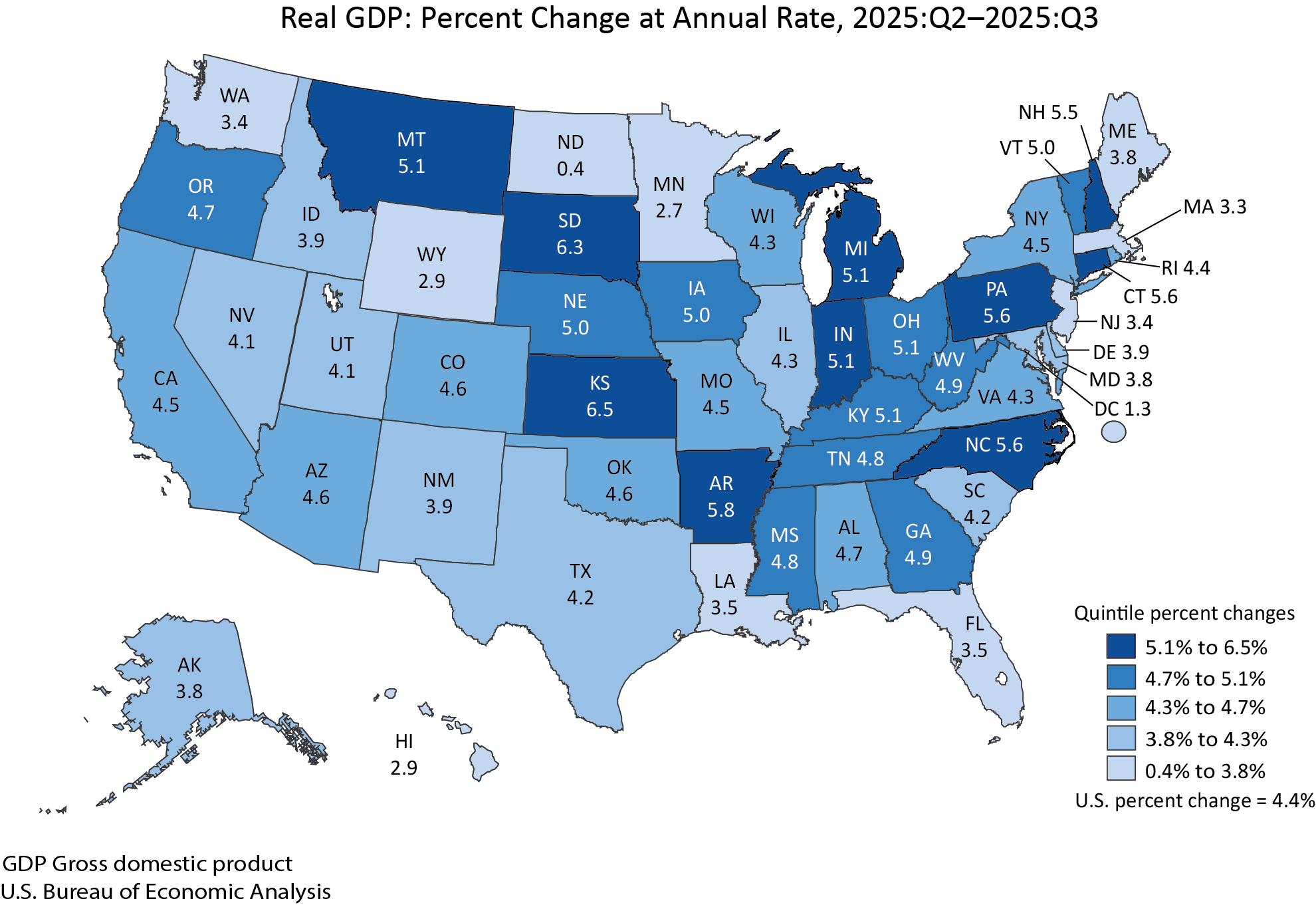
In the United States, state boundaries are more than lines on a map. They define regulatory authority, tax regimes, labor laws, infrastructure priorities, and public policy outcomes. For both policymakers and business leaders, decisions that ignore state-level variation often miss critical risks and opportunities.
State-level maps bridge this gap. By visualizing differences across states, they transform fragmented data into coherent insight—helping leaders understand where conditions diverge, why they do, and how to act on them. In a country as large and decentralized as the US, this level of geographic clarity is essential.
The US Operates as a Federal Patchwork
Unlike many countries with centralized governance, the US delegates significant authority to states. This means that outcomes vary widely across the country—even when national trends appear stable.
State governments control or influence:
- Tax policy and incentives
- Labor and employment regulations
- Healthcare administration
- Education funding
- Environmental and energy policy
A national average smooths over these differences. State-level maps reintroduce the reality that decisions must be tailored—not generalized.
Making Policy Differences Immediately Visible
Policy documents and spreadsheets can list differences across states, but they are slow to interpret. Maps accelerate comprehension.
A state-level map can instantly show:
- Which states have adopted a policy
- Where regulatory gaps exist
- How neighboring states compare
- Whether adoption clusters regionally
This visual immediacy is valuable for policymakers evaluating peer performance and for businesses assessing compliance complexity. Patterns that might take hours to uncover in tables become obvious in seconds.
Improving Regulatory Strategy for Businesses
For businesses operating across multiple states, regulation is one of the largest sources of complexity and cost.
State-level maps help organizations:
- Identify high-compliance-burden states
- Plan phased rollouts aligned with regulation
- Anticipate legal risk by geography
- Allocate legal and compliance resources efficiently
Instead of reacting to regulatory surprises, companies can proactively design strategies that respect state-by-state differences.
Supporting Smarter Market Entry Decisions
When expanding into new markets, businesses must evaluate far more than consumer demand.
State-level maps allow leaders to layer:
- Tax incentives and credits
- Labor availability and cost
- Infrastructure readiness
- Regulatory friendliness
This layered spatial analysis reveals which states offer the best overall conditions—not just the largest markets. It also highlights trade-offs that might otherwise be overlooked.
Enhancing Economic Development Planning
State governments themselves use maps to guide economic development.
By mapping:
- Employment trends
- Industry concentration
- Workforce skills
- Infrastructure gaps
…policymakers can target investments more precisely. Rather than spreading resources thinly, they can focus on states or regions where intervention will have the greatest impact.
For businesses, these maps signal where public investment is likely to flow—an important input for long-term planning.
Clarifying Public Health and Social Outcomes
Public health outcomes vary widely across US states due to differences in funding, policy choices, and demographics.
State-level maps are especially effective for:
- Tracking disease prevalence
- Comparing healthcare access
- Evaluating policy interventions
- Identifying underserved populations
During crises, this clarity supports faster coordination and more equitable responses. For private-sector healthcare and insurance providers, it informs pricing, network design, and risk assessment.
Turning Data Into Actionable Comparisons
One of the strengths of state-level maps is comparative clarity.
They allow decision-makers to ask:
- Why is this state outperforming its peers?
- Which policies correlate with better outcomes?
- Where are anomalies that need investigation?
Comparisons feel fairer and more intuitive at the state level than at the national level, where internal variation is hidden.
Supporting Evidence-Based Policymaking
Evidence-based policy requires transparency and accountability.
State-level maps support this by:
- Showing before-and-after policy impacts
- Highlighting unintended consequences
- Making outcomes visible to the public
When citizens and stakeholders can see how states differ, debates shift from ideology to evidence. This transparency strengthens trust and improves the quality of policy discourse.
Aligning Business Strategy With Public Policy
Businesses do not operate independently of policy environments.
State-level maps help companies:
- Align investment with supportive policy climates
- Anticipate regulatory headwinds
- Engage more effectively with state governments
This alignment reduces friction and improves long-term viability—especially in regulated industries such as energy, healthcare, finance, and transportation.
Managing Risk Through Geographic Awareness
Risk is rarely distributed evenly.
State-level maps are used to visualize:
- Climate and environmental risk
- Legal and regulatory exposure
- Economic volatility
- Infrastructure resilience
By seeing where risks concentrate, both policymakers and business leaders can prioritize mitigation efforts. This geographic framing turns risk management from a reactive exercise into a strategic one.
Improving Communication With Stakeholders
Complex decisions often require buy-in from multiple stakeholders.
Maps improve communication by:
- Providing a shared reference point
- Reducing technical jargon
- Making trade-offs visible
Whether briefing legislators, boards, or investors, state-level maps help align understanding and reduce misinterpretation.
Avoiding the Pitfalls of National Averages
National averages can be misleading.
For example:
- National employment growth may hide state-level job losses.
- National healthcare metrics may mask severe disparities.
- National business trends may conceal regional saturation.
State-level maps counter this by revealing divergence. They help leaders avoid one-size-fits-all decisions based on incomplete pictures.
Designing Better Incentives and Interventions
Policy interventions are most effective when they are targeted.
State-level maps help identify:
- Where incentives are underperforming
- Where additional support is needed
- Which states are ready for scaling programs
For businesses, this clarity informs site selection, hiring strategy, and partnership decisions.
Why State-Level Is Often the “Right” Level
While city- and national-level maps have their place, state-level maps often strike the right balance.
They are:
- Detailed enough to show meaningful differences
- Broad enough to support strategic decisions
- Familiar to US audiences
This balance makes them particularly effective in cross-sector discussions where both policy and business considerations intersect.
Conclusion: Better Decisions Start With Clear Geography
State-level maps improve policy and business decisions because they align with how the United States actually functions.
They reveal regulatory diversity, economic variation, and social outcomes that national views obscure. They support comparison, transparency, and strategic alignment. Most importantly, they turn data into decisions by making differences visible and understandable.
For mapsandlocations.com, this reinforces a central insight: geography is not context—it is content. When policy and business leaders see the US at the state level, they don’t just see where things happen. They see why outcomes differ—and where better decisions can be made.