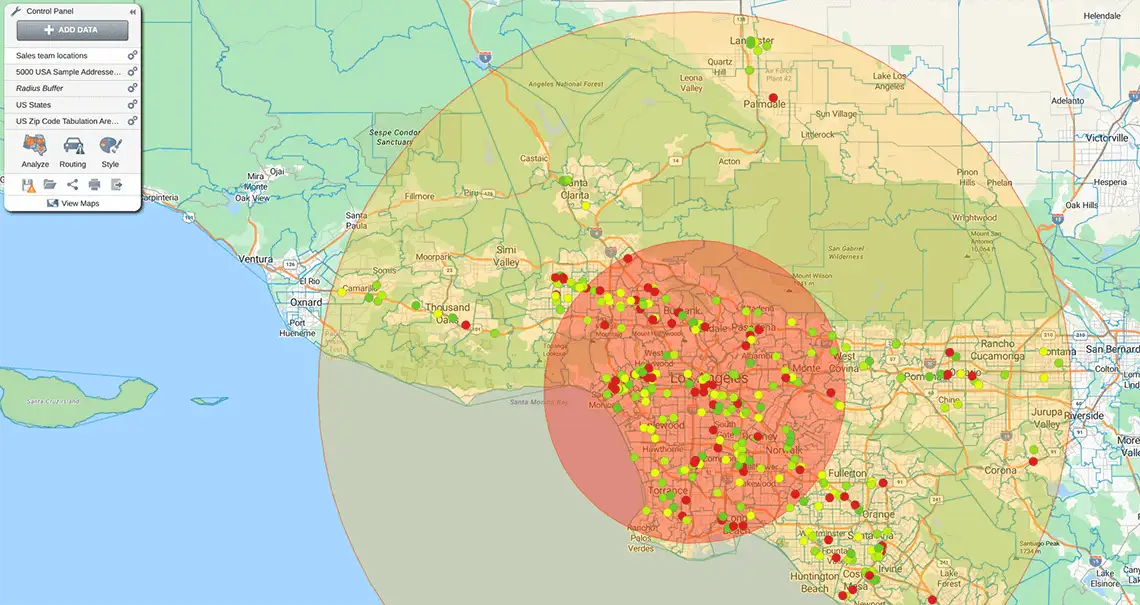
For American homebuyers, location is not just a preference—it is the foundation of the buying decision. Before evaluating price, floor plans, or finishes, buyers want to understand where a home sits within the fabric of daily life. In this context, location maps have become one of the most influential tools in real estate marketing and sales. A well-designed location map can build confidence, answer objections, and accelerate decisions. A poor one can create doubt and delay.
Understanding what American homebuyers actually look for in location maps is critical for developers, brokers, and platforms that want to convert interest into action.
Clear Context Within the City or Region
The first thing American homebuyers look for is context. They want to know how a property fits into the larger city or metro area.
Effective location maps immediately answer:
- Where is this relative to downtown or major job centers?
- Is it in an established neighborhood or an emerging area?
- How does it connect to the rest of the city?
Buyers should not need prior local knowledge to understand the map. Clear orientation, recognizable landmarks, and simplified geography help buyers grasp location within seconds.
Commute and Connectivity Information
Commute time is one of the most decisive factors for US homebuyers. Location maps that fail to address connectivity create immediate friction.
Homebuyers look for:
- Major highways and arterial roads
- Public transit lines (metro, rail, bus)
- Approximate commute times to employment hubs
- Airport access for frequent travelers
Maps that visually show routes and distances are far more persuasive than verbal assurances. Buyers want to see how their daily movement will work, not imagine it.
Schools and School District Boundaries
For families, school quality often outweighs nearly every other factor. American homebuyers pay close attention to:
- Nearby schools
- School district boundaries
- Proximity to elementary, middle, and high schools
Location maps that clearly label schools and districts help buyers quickly assess suitability for long-term living. Even buyers without children often consider school districts due to their impact on resale value.
Everyday Amenities and Lifestyle Infrastructure
Homebuyers are not just buying a house—they are buying a lifestyle. Location maps that highlight everyday amenities perform significantly better.
Buyers look for proximity to:
- Grocery stores and pharmacies
- Parks and recreational areas
- Restaurants, cafes, and retail
- Gyms, community centers, and entertainment zones
When these elements are shown visually, buyers can imagine daily routines more easily. This emotional clarity often shortens the decision-making process.
Healthcare Access and Safety Signals
Healthcare access is increasingly important for American buyers, particularly families and older homeowners. Location maps that show:
- Hospitals
- Urgent care centers
- Clinics and specialty care
help buyers feel secure about emergency and long-term needs.
Similarly, while safety is sensitive, buyers infer safety through visual cues—well-connected areas, established neighborhoods, civic infrastructure, and proximity to services. Clean, informative maps subtly reinforce trust.
Neighborhood Character and Surroundings
American homebuyers want to know what surrounds the property, not just what is nearby.
Good location maps communicate:
- Residential vs commercial zones
- Parks, green buffers, and open spaces
- Major roads versus quiet streets
- Adjacent developments or land use
This helps buyers understand noise levels, privacy, and overall neighborhood character—factors that strongly influence comfort and satisfaction.
Future Development and Growth Indicators
Buyers are increasingly interested in how a neighborhood will evolve. Location maps that include future-oriented information build confidence and urgency.
Buyers look for:
- Planned transit lines
- Upcoming commercial or mixed-use developments
- Infrastructure improvements
- Regeneration or redevelopment zones
Clear differentiation between existing and proposed features is critical. When done transparently, future development maps increase perceived long-term value.
Accurate Distances and Realistic Scale
American homebuyers are highly sensitive to exaggeration. Maps that distort distances or use vague labels like “nearby” quickly lose credibility.
What buyers expect:
- Realistic distances
- Honest travel times
- Proper scale representation
- No misleading compression of geography
Trustworthy maps reduce skepticism and minimize follow-up questions that slow down sales.
Easy-to-Read, Uncluttered Design
Homebuyers are not analysts. They want clarity, not complexity.
Effective location maps:
- Avoid excessive labels
- Use simple icons
- Maintain strong visual hierarchy
- Highlight what matters most
Maps overloaded with information often overwhelm buyers and dilute key messages. Simplicity improves comprehension and retention.
Mobile and Digital Friendliness
Many American homebuyers first encounter location maps on phones—via listings, emails, or shared links.
They expect maps that:
- Are legible on small screens
- Load quickly
- Maintain clarity when zoomed
- Work well in virtual tours and video calls
Maps that only work in printed brochures fail to support modern buying behavior.
Support for Comparison and Decision-Making
Homebuyers almost always compare multiple properties. Location maps that help with comparison reduce decision fatigue.
Buyers value maps that:
- Clearly differentiate one location from another
- Highlight relative advantages
- Show trade-offs transparently
When buyers can visually compare locations, they move toward decisions faster.
Emotional Confidence, Not Just Information
Ultimately, American homebuyers use location maps to answer one core question: Can I see myself living here?
The best maps do more than inform—they reassure. They reduce uncertainty, validate instincts, and make the decision feel safe. When buyers feel confident about location, other decisions follow more quickly.
Common Mistakes That Turn Buyers Away
Homebuyers quickly disengage when maps:
- Use generic screenshots
- Exaggerate proximity
- Hide inconvenient details
- Feel outdated or inaccurate
Transparency and clarity consistently outperform marketing hype.
Final Thoughts
For American homebuyers, location maps are not optional visuals—they are decision tools. Buyers use them to evaluate lifestyle fit, daily convenience, long-term value, and emotional comfort. Maps that answer these needs clearly and honestly accelerate trust and shorten the path to purchase.
For developers and real estate marketers, investing in thoughtful, accurate, and buyer-centric location maps is one of the most effective ways to improve conversions. In a market where buyers are cautious and well-informed, the right location map often makes the difference between hesitation and commitment.