How US Startups Use Custom Maps in Pitch Decks to Raise Capital
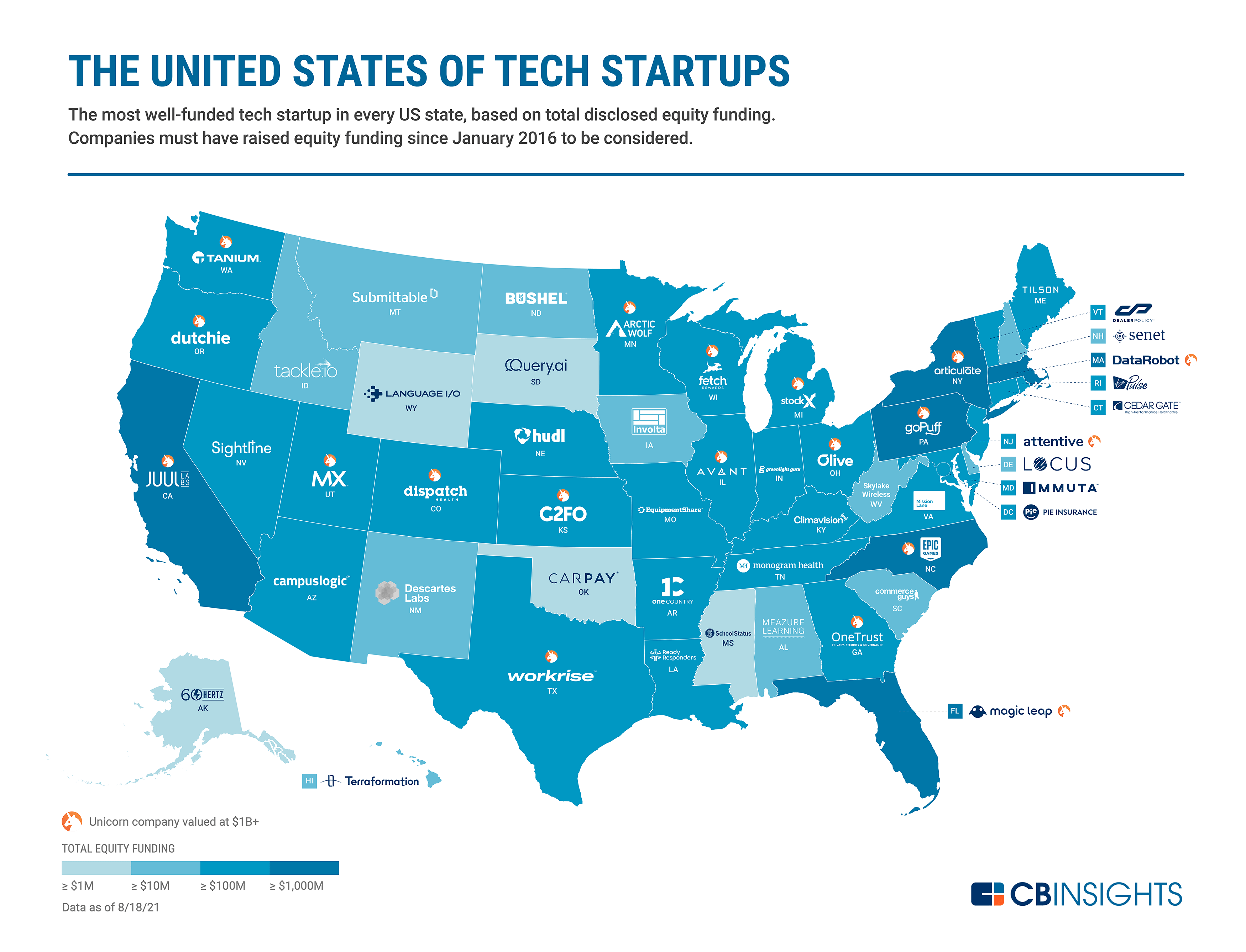
In the US startup ecosystem, pitch decks are compressed narratives. Founders have minutes, sometimes seconds, to explain a problem, prove market opportunity, and convince investors that their solution can scale. In this high-stakes environment, custom maps have become one of the most effective storytelling tools in modern pitch decks.
For startups operating in logistics, proptech, climate, fintech, mobility, retail, and enterprise SaaS, maps are no longer decorative slides. They are strategic instruments used to demonstrate market understanding, traction, defensibility, and growth potential.
Investors Think in Markets, Not Just Products
Early-stage investors are less concerned with product polish than with where the product wins.
They want to know:
- Where demand exists
- Where growth will come from
- Where competitors are weak
- Where expansion is most efficient
Maps answer these questions instantly. A well-designed map can show market size, geographic concentration, and expansion logic far more clearly than charts or spreadsheets.
This is why US startups increasingly replace text-heavy “market opportunity” slides with spatial visualizations.
Making TAM, SAM, and SOM Visually Obvious
Every pitch deck includes some version of Total Addressable Market (TAM), Serviceable Available Market (SAM), and Serviceable Obtainable Market (SOM). Traditionally, these are shown as concentric circles with dollar figures.
Maps upgrade this abstraction into reality.
By visualizing:
- Target cities
- High-density customer zones
- Priority regions
Startups show investors that their market sizing is grounded in geography, not assumptions. This spatial grounding increases credibility—especially for location-sensitive businesses.
Proving the Problem Exists at Scale
A core investor question is simple: Is this a real problem, or an isolated one?
Maps help answer this by showing:
- Geographic concentration of pain points
- Infrastructure gaps
- Inefficiencies across regions
For example, a logistics startup can show congestion zones, while a climate startup can map risk exposure. Instead of asserting urgency, founders let the geography speak for itself.
This shifts the pitch from persuasion to evidence.
Demonstrating Early Traction and Momentum
US investors are highly sensitive to signals of momentum. Even modest traction looks stronger when mapped.
Startups use maps to show:
- Active customers by city or region
- Usage density
- Month-over-month geographic expansion
A simple progression—from one city to several—visually reinforces growth narratives. It also signals operational capability: the team can launch, onboard, and support users across locations.
Explaining Go-To-Market Strategy Clearly
Many promising startups fail to articulate how they will expand.
Maps clarify go-to-market logic by illustrating:
- Launch sequences
- Hub-and-spoke expansion
- Territory-based sales strategies
Instead of vague statements like “we’ll expand nationally,” founders can show why specific regions come first and how each unlocks the next.
This level of clarity resonates strongly with US venture capitalists, who have seen countless overly optimistic expansion claims.
Competitive Positioning Through Spatial Differentiation
Competition slides often list logos. Maps do something more powerful: they show where competitors are strong and where they are absent.
Startups use maps to:
- Highlight underserved regions
- Show fragmentation in legacy markets
- Identify geographic white space
This spatial differentiation reframes competition as opportunity. Investors are not just told the startup is different—they are shown where it wins.
Reducing Perceived Risk for Investors
At its core, venture investing is about managing uncertainty.
Maps reduce uncertainty by:
- Making assumptions visible
- Showing constraints and boundaries
- Clarifying dependencies on infrastructure or regulation
For regulated or asset-heavy startups, this is especially important. A clear geographic context reassures investors that risks are understood, not ignored.
Maps as Proof of Founder Insight
One subtle but critical factor in fundraising is founder credibility.
When founders use maps well, they demonstrate:
- Deep understanding of their market
- Familiarity with operational realities
- Ability to think systemically
This is why many experienced US investors associate strong spatial storytelling with strong founders. It suggests the team sees the business as a real-world system, not just a set of metrics.
Aligning With How Investors Evaluate Opportunities
Many US venture firms internally analyze deals using geographic data—especially for consumer, logistics, and infrastructure-adjacent startups.
When a pitch deck already speaks this language, it reduces friction. Investors do not need to reinterpret the opportunity; they can engage immediately at a strategic level.
This alignment subtly but meaningfully improves pitch outcomes.
From Static Slides to Strategic Conversations
Importantly, maps do not end at the pitch deck.
Founders often reuse the same maps in:
- Partner discussions
- Customer demos
- Follow-up investor meetings
A strong map becomes a reusable asset that supports the entire fundraising process. It anchors conversations, resolves confusion, and keeps discussions focused on fundamentals.
What Separates Effective Maps From Weak Ones
Not all maps help fundraising. The most effective ones share common traits:
- Simplicity over detail
- Clear narrative intent
- Alignment with the business model
- Visual hierarchy that guides attention
Overloaded or generic maps can distract. Purpose-built maps clarify.
Why This Matters More in the US Ecosystem
The US startup ecosystem is crowded, fast-moving, and highly competitive. Investors see thousands of decks every year.
Maps cut through this noise because:
- They are processed faster than text
- They improve recall after meetings
- They turn abstract claims into concrete visuals
In short, they make pitches more memorable—and memorability matters when decisions are made days or weeks later.
Conclusion: Maps Turn Ideas Into Investable Stories
US startups use maps in pitch decks not because they look good, but because they compress complexity into clarity.
Maps help founders show where problems exist, where value is created, and where growth will happen. They strengthen credibility, reduce perceived risk, and align pitches with how investors actually think.
For mapsandlocations.com, this trend reflects a broader truth in modern fundraising: capital follows clarity. And few tools deliver clarity as efficiently and convincingly as a well-crafted map.